
What to do with family heirlooms and found treasures?

Photo by Leeloo Thefirst on Pexels.com

Now that I’ve published two books about finding antique treasures (pottery in the mansion in Her One in a Million; Faberge in How to Spot a Fake), I thought I’d talk a little bit about what to do if you find something/inherit something that might be valuable.

My main and number one tip?

Don’t be intimidated, ask an expert!

After grad school, I worked for an auction house in Chicago in the furniture and decorative arts department, cataloging items for sales. We found antiques for sale in all sorts of ways. From lawyers settling estates to recommendations from insurance appraisers, but contacts from people clearing out their attics were my personal favorite. We’d field calls, emails, appointments, and letters with photographs.

Like in my books, treasures can be anywhere! If you think you have something special, auction houses want to hear from you! You don’t need to go to a major East or West coast firm. There are plenty of reputable firms all over the country.

The main benefit of going to an auction house is their reach. Sales are almost always online as well as in-person, making your treasure available to a global audience.

What if you aren’t sure and don’t want to reach out without a better idea of what you have? For American silver and pottery, you can do a little preliminary work on your own. I highly recommend the Kovels’ guides, in particular The Collector’s Guide to American Art Pottery (also just a really great read!) and American Silver Marks. (Silver was one of my favorite decorative arts to catalogue and sell because 1) it’s always been valuable so families would hold on to it for generations and 2) the marks make it easy to identify what you have. British and European silver have their own series of marks. Check out Miller’s Silver Marks as a guide).

When in doubt, reach out. You’ll never know what you have if you don’t ask.
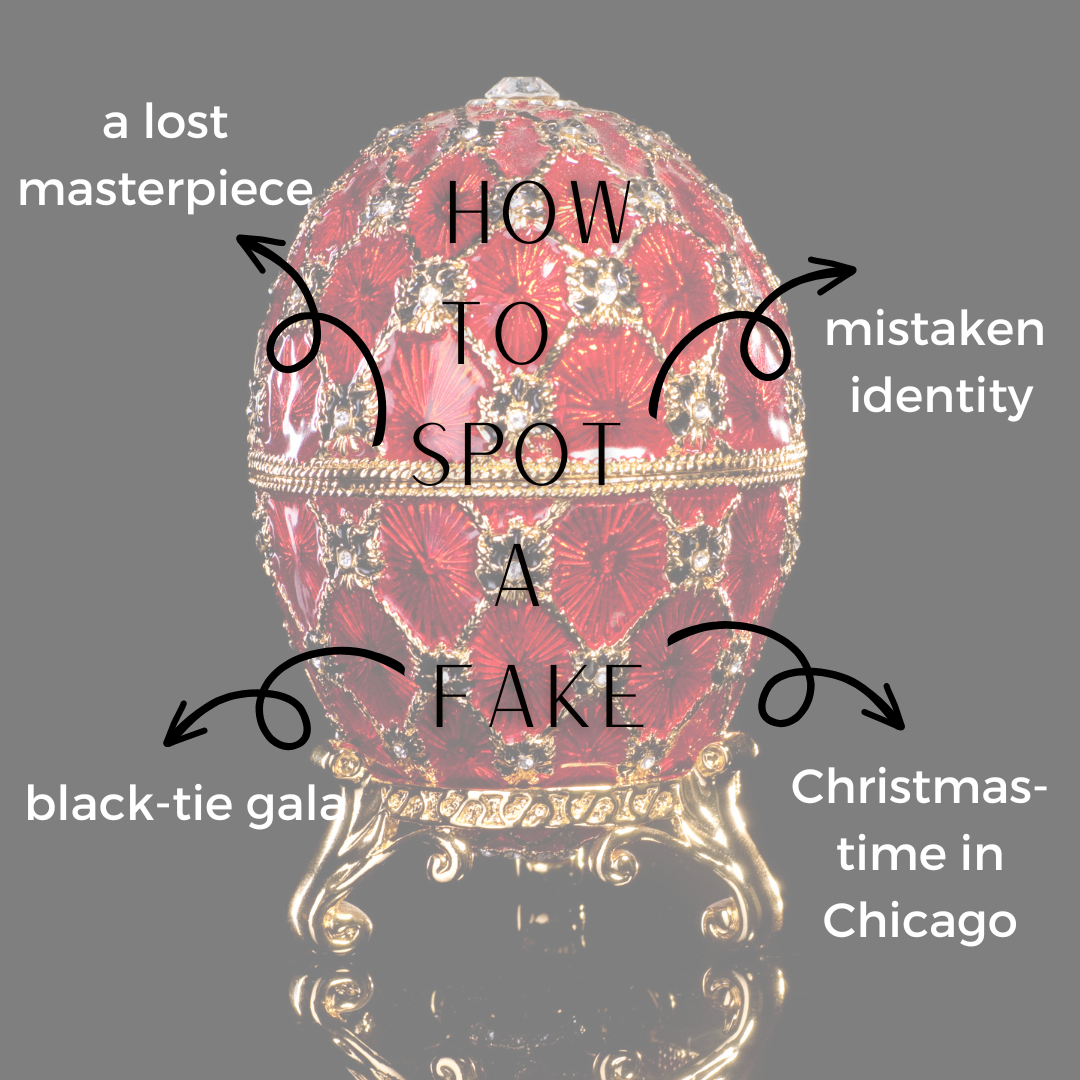
The real-life inspiration for How to Spot a Fake

How To Spot A Fake is the story of my heart.

How to Spot tropes

Initially drafted as the second of a trilogy that never fit into my brand, I had been toying with ideas for how to adapt the book into a standalone for years. When I finally figured out how, I couldn’t stop writing. I love these characters and hope you will too!

I’ve talked about my art history background before (RIP Kindle Worlds) and my latest project highlights a lost work of art. Rediscovering a priceless work of art might seem like a far-fetched dream, but it does happen. If you love art history, check out Raiders of the Lost Art on Amazon Prime Video. I’ve watched this series a hundred times and was inspired by one story in particular.

In How To Spot A Fake, one of the Faberge Imperial eggs causes all sorts of problems for the hero and heroine. After the fall of the tzars, the Faberge Imperial eggs were scattered around the globe. These eggs, made specifically for the royalty of Russia, are especially valuable considering historians know how many eggs were made, for what purpose, and what they should look like.

The most recent egg to be rediscovered has an incredible story. It is featured in the show and you can read more at the article below.

http://www.cnn.com/style/article/faberge-third-imperial-egg/index.html

My story focuses on an egg that is still missing, the Alexander III Commemorative egg. Commissioned in 1909, the egg was last seen before the Russian Revolution. The egg is white enamel (with gold and platinum). The egg on the cover is red–this was a deliberate choice. The only image of the egg is a black and white illustration based on the written description, I wanted a more dramatic look. This is a work of fiction but I hope it is found (and I’m sure the real story of where it has been will be no less fantastic and romantic!)